I’ve always loved Halloween – ever since I was a little girl, I looked forward to any opportunity to dress up, and Halloween was the best night of the year to become anything you wanted to be. The Evangelical Christian community I grew up in approached Halloween with great suspicion, so our late-October parties for wearing costumes and collecting candy were dubbed “Harvest Festivals.” Ironically, this name points more strongly than “Halloween” toward the ancient origins of the Celtic festival of Samhain that is celebrated by many modern pagans and witches today.
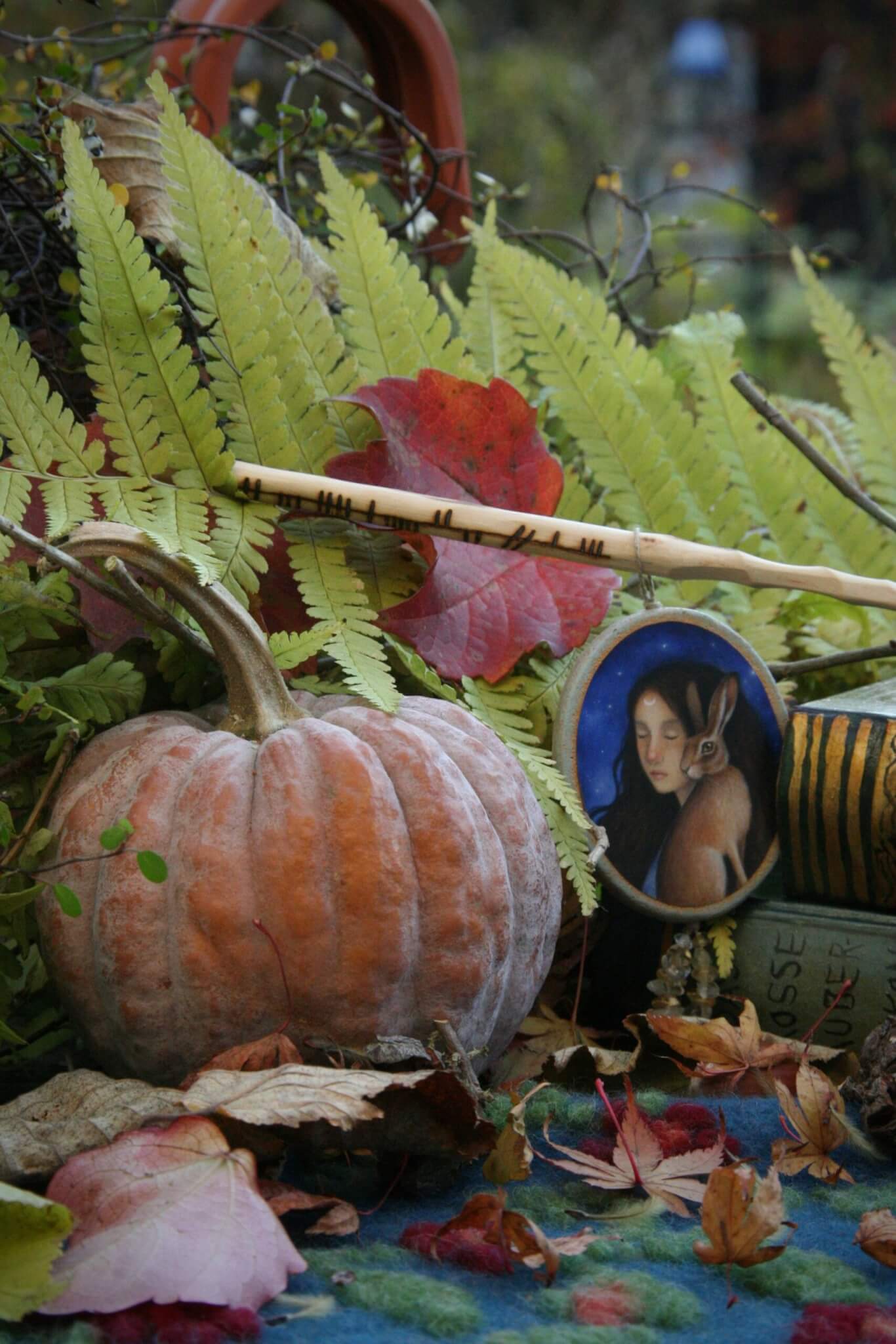
In pre-Christian Ireland, Samhain (pronounced SAH-win) was celebrated at the end of the harvest season. “Halloween,” on the other hand, is of Christian linguistic origin, referring to the eve (or “e’en,” to the Scots) of All Hallows Day, which honors the saints who have died. It’s speculated that All Hallows Day became a canonized celebration of the Christian Church in the 9th century in order to Christianize and absorb the Celtic traditions of honoring the dead during Samhain.
The contemporary celebration of Samhain by modern pagans and witches – a big tent that includes Wiccans, secular Pagans, theistic Pagans, practitioners of ancestral folk magic, a variety of modern witchcraft traditions, and more – reclaims ancient traditions and simultaneously creates brand new ones. My own practice is rooted in the Reclaiming tradition, founded in 1979. Its core values of “personal authority, inclusivity, social and environmental justice, and a recognition of intersectionality” share a lot in common with UU values. And like Unitarian Universalism, my personal witchcraft traditions around Samhain draw from a multitude of sources that influence how I experience the world – the Celtic traditions of my ancestors, the local traditions of Dia de Muertos, Christian ideas about the saints that have gone before us, observations from nature around the cycles of life and death, folk beliefs about how the dead can speak to the living, my childhood memories of putting on a Halloween costume and becoming someone else.
UUs and Pagans – and we are often one and the same – claim our right to create new traditions and practices that are meaningful for our time and place, while we also do our best to honor and respect the sources that inspire us. At our “Witchy Halloween Party” on November 1st, we will put this into practice by learning how to create spells and rituals that work for us, and exploring how secular skeptics, devout religious folks, and everyone in between can access the magic of the craft. It will be a time to learn more about Samhain and the diverse practices of modern witchcraft, to enjoy the merriment of friends, food, and fun, and to honor our spiritual ancestors on the day when the veil between life and death is thin.
If you would like to attend Witchy Halloween on Saturday, November 1st (all ages are welcome!) and have not yet RSVP’d, please email me at dmre@uusm.org. In the meantime, if you’re interested in exploring witchcraft and modern paganism, some good reads are the Starhawk classic The Spiral Dance, the emotional balance ritual guide Mood Magick by Ora North, and my most recent witchy read, Spells for the Apocalypse by Carmen Spagnola. You can also find pagans and practitioners of the craft in our own congregation – and as much as I love the written word, there’s nothing like talking to someone face to face to learn more about their spiritual path. So whether you’ve been practicing for decades or you’re a curious newcomer, I hope to see you on Samhain!